
📚Cruss-aunt, Kwu-Saunh, Cruh-Sahnt✍️French Expression of the Week💡Learn French with movies
Your best weekly French Newsletter send by Carlito

SALUT😁
And BIENVENUE to the new French learners (this newsletter is getting big, more than 4k people learning French together 😊)

This is Carlito, the French teacher behind this newsletter that’s like a surprise chicken nugget in your order of fries. You know it’s about to be a great day when that happens 😉
Here’s what's on the menu today:
✍️French Expression of the Week
📚Cruss-aunt, Kwu-Saunh, Cruh-Sahnt…
💡Learn French with movies

✍️French Expression of the Week
Today, I'll be exploring the nuances of the French language and learning to speak like a true Parisian 🥖
Being able to speak French in an idiomatic way is important for many reasons 🙂
It allows you to express yourself fluidly and confidently, which can help you be understood and make friends in French-speaking countries
It can help you better understand French culture and form deeper connections with people you meet
Together, we'll discover 3 common expressions in French, how to use them in everyday situations, and how to incorporate them into your vocabulary.
So, are you ready to enhance your French and become an idiomatic speaker?
Let's get started🚀

Did you know...?
The French idiom ‘poser un lapin à quelqu’un’ means 'to stand someone up'
The expression :
Poser un lapin à quelqu’un
What does it mean ?
Poser un lapin à quelqu’un has long been one of my all-time favorite French expressions
The idiom means ‘to stand somebody up’ but its literal translation is ‘to put a rabbit to somebody’
Here’s an example:
Je l’ai attendue pendant une heure devant le bar mais elle m’a posé un lapin. I waited for her for an hour in front of the bar but she stood me up
I hope it doesn’t happen to you this weekend 🤣

The expression :
Revenons à nos moutons
What does it mean ?
To get back to the main topic
‘Revenons à nos moutons is a great expression for when you’re having a conversation and end up on a tangent
The meaning of the expression is ‘Let’s get back to what we were talking about’
A direct translation is ‘Let’s return to our sheep.’
Thus, after getting sidetracked you could say to your conversation partner:
On en était où? Revons à nos moutons. Where were we? Let’s get back to what we were talking about
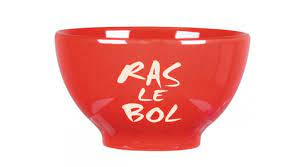
The expression :
En avoir ras-le-bol
What does it mean ?
To have had enough
En avoir ras-le-bol is in informal French expression that translates literally to ‘to have a full bowl’
The expression means to be totally fed up or sick of something. Synonyms are ‘en avoir assez’ and ‘en avoir marre’
Here’s an example sentence:
La musique chez les voisins commence a m’énerver. J’en ai ras-le-bol! The neighbors’ music is starting to bother me. I’ve had it!

📚Cruss-aunt, Kwu-Saunh, Cruh-Sahnt…

Now, let’s talk about one of France's most iconic culinary symbols: the croissant🥐
Why did I choose to speak about “croissant” ? I’m just hungry (it’s 1pm when I write this) and I love “croissant”!
The croissant is a popular breakfast item in France, but it is also enjoyed around the world !
With its flaky crust and soft interior, the croissant is the perfect choice for those seeking a sweet and delicious snack 🙂
So, are you ready to dive into the world of croissants and learn French at the same time?
Introduction to croissants
Have you ever taken a bite of a warm, flaky croissant and thought to yourself, "Wow, I'd like to learn more about the history of this delicious pastry"?
Well, today's your lucky day!
Croissants have been around for over 200 years and have become a staple of French cuisine. But do you know why they're shaped like a crescent?
Legend has it that croissants were created to celebrate a victory against the Ottoman Empire in 1683. The crescent shape symbolized the Ottoman flag, and eating croissants was a way to "conquer" the enemy.
So what do you need to make croissants?
Well, let's start with the basics - flour, yeast, sugar, salt, butter, and milk.
But wait, butter? Yes, lots of butter 🧈
In fact, the more butter you use, the flakier and more delicious your croissants will be
So, if you're looking for a low-fat option, croissants might not be for you!
French expressions related to croissants
Now that we know all about croissants, let's practice our French vocabulary and grammar📘
Here are some words you should know : "une boulangerie" (a bakery), "un croissant" (a croissant), and "un pain au chocolat" (a chocolate croissant)
And if you're ever in France and want to order a croissant, just say "Un croissant chaud et beurré, s'il vous plaît" (A hot, buttered croissant, please)
But how do you say “croissant” ? That’s a good one, and you can have the answer here
Voilà voilà, j’ai encore plus faim maintenant 😔
If you want to know where to find the best “croissant” in Paris, send me a message, I will give you my top 10 😃

💡Learn French with movies
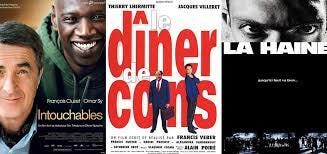
Well, If you enjoy watching movies, why not take advantage and combine it with French language learning (yeah, that’s smart, I know 😉)
So why not pop some popcorn, sit back, and enjoy a French film while enhancing your language skills🍿
After all, you can watch whatever films you’re interested in and learn at the same time!
Here are some movies you can watch to learn French 📽️
Intouchables
Amélie
La Haine
Un long Dimanche de fiançailles
OSS 117, Le Caire, Nid D’Espions
Les Choristes
These movies will give you a taste of the French language, culture, and film styles, and help you build your listening and comprehension skills 🙃
Enjoy the show!
That's a wrap for today!
Stay thirsty & see ya next Sunday🥰
If you want more, be sure to follow my Insta and Tiktok accounts
If you enjoy today’s newsletter, tell your mum
If you received this newsletter and like it👇
And Cyrano, and Roxanne, The alien card, the three musketeers, and lots and lots of action sequence fencing maneuvers.
My favourite film noir is le femme Nikita